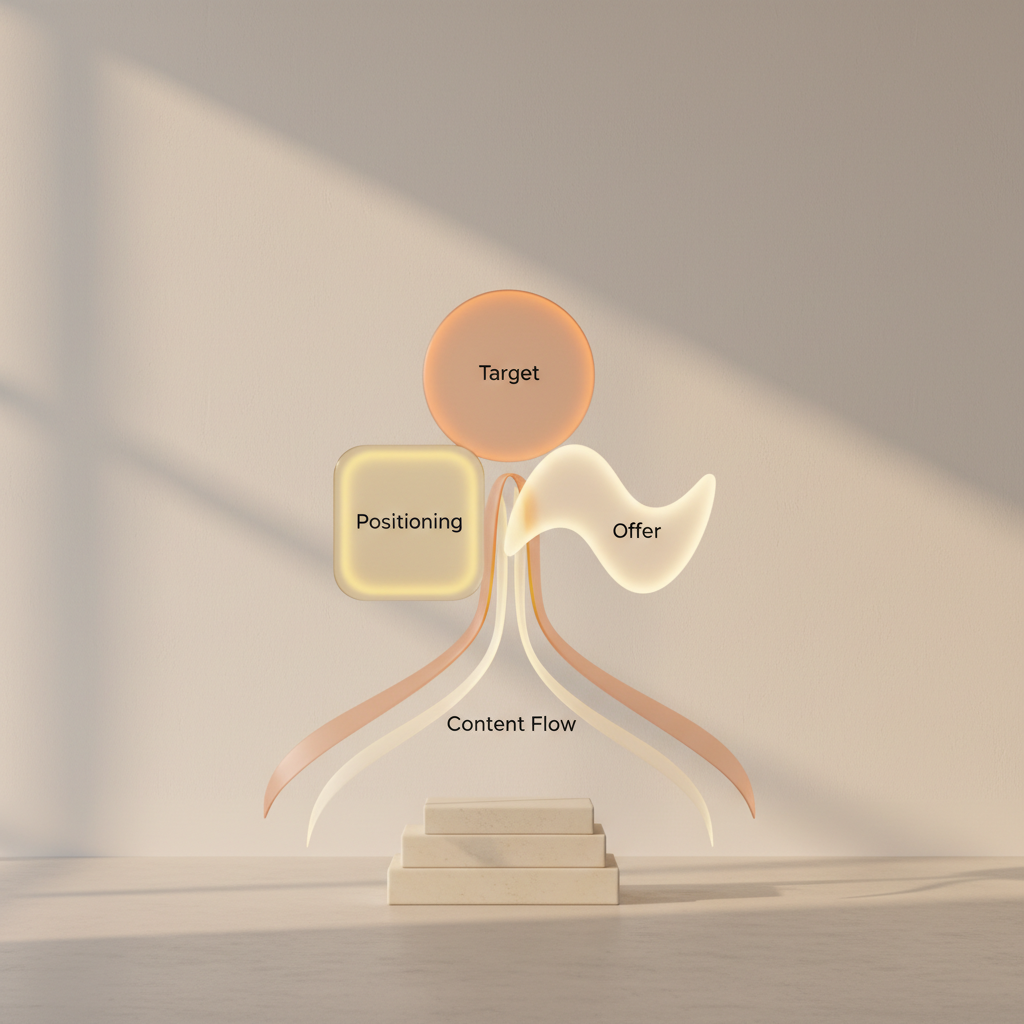
Content marketing for service businesses often feels like shouting into the void. You pour effort into blog posts, social media updates, and emails, but the clients you truly want remain elusive. The problem isn't your dedication; it's often a lack of strategic foundation. This is where the TPO Method fundamentals come into play, offering a robust framework to align your content, attract your ideal client, and drive quantifiable results.
The TPO Method: Your Blueprint for Content Success
The TPO Method isn't just another content strategy; it’s a systematic approach designed specifically for service businesses like consultancies, agencies, and law firms. It eliminates guesswork and focuses your efforts on what truly matters: serving your clients and growing your business. At its core, the TPO Method simplifies your content strategy into two main components: the Three Pillars and One Offer.
Pillar 1: Understanding Your Audience (Who)
Before you write a single word, you must deeply understand who you're trying to reach. This goes beyond demographics. It’s about psychographics – their aspirations, fears, challenges, and goals. What keeps them awake at night? What problems are they desperately trying to solve? When you truly understand their needs, your content ceases to be generic noise and becomes a beacon of solutions.
Your audience mapping should involve:
- Identifying Ideal Client Personas: Create detailed profiles of your dream clients. Give them names, backstories, and define their professional pain points. What kind of language do they use? Where do they seek information?
- Uncovering Core Challenges: Go beyond surface-level issues. Dig into the root causes of their problems. Your content should demonstrate profound empathy and a clear understanding of their situation.
- Defining Desired Outcomes: What does success look like for your ideal client? How will their life or business improve after solving their problem? Your content should paint a vivid picture of this desired future.
Without this foundational understanding, your content will miss its mark. It will feel impersonal and fail to resonate with the people you're trying to serve. Spending ample time on this first pillar is non-negotiable for effective content marketing.
Pillar 2: Articulating Your Solution (What)
Once you know who you're talking to, the next step in the TPO Method fundamentals is to clearly articulate what you do and, more importantly, how it solves their specific problems. Many service businesses struggle here, focusing too much on features and not enough on transformation. Your solutions aren't just services; they are pathways to desired outcomes.
Consider these points when defining your solution:
- Problem-Solution Framing: For every challenge identified in Pillar 1, articulate how your service directly addresses and resolves it. Show, don't just tell.
- Unique Value Proposition: What makes your approach different or better? Why should a client choose you over a competitor? This isn't about denigrating others; it's about confidently asserting your distinct value.
- Benefit-Driven Language: Translate features into benefits. Instead of "we offer SEO services," say "our SEO services help you rank higher on Google, attracting more qualified leads directly to your business."
Clarity here is paramount. Ambiguity breeds distrust and reluctance. Your potential clients need to understand precisely what they stand to gain by working with you.
Pillar 3: Demonstrating Your Expertise (How)
The final pillar, how you deliver your solution, is where you build trust and credibility. It’s about showcasing your process, your approach, and your track record. This isn